We enjoyed making video indents to appear on the video wall along side clips from a selection of Folk Horror films during our conference.
Sophie Parkes-Nield – An Introduction

My fondest memory of my teenage years was the afternoon we were chased by hobby horses. It was a Saturday afternoon and me and my four friends were hanging around in our local town centre, as teenagers are wont to do, and the hobby horses – I remember one with a horn, more like a hobby cow than a horse, that moaned as you neared it, and another head to toe in tatters – saw us as fair game. ‘If one of those things comes near me…’ one of us said, and that was it. The hobby horses took flight and we barrelled into a nearby toyshop to hide. We cowered behind a stack of boxed Sylvanian Families. They were still waiting for us when we crept out, leading to another chase and this time, a chippy for safety. The staff were not amused and told us to leave.
As I grew older, I realised that this memory was perhaps not the most common of memories. And Banbury, my Oxfordshire hometown, not the most normal of places. When I reached university in Manchester, no one else in my halls had spent their formative years in a folk club listening to unaccompanied singers murdering ‘First Time Ever I Saw Your Face’ or wet April days drinking on the green as the village’s Morris men leapt about the tarmac. I understood that I had been given a glimpse of the England, the Britain, that not everyone has the opportunity to experience.

I became fascinated by calendar customs and living traditions, and the music and lore at their heart. As I was researching my first book, Wayward Daughter, the official biography of folk music legend, Eliza Carthy, I was lucky enough to experience the Goathland Plough Stots’ day in North Yorkshire, and my experience of the Saddleworth Rushcart was one of the reasons why I fell in love with the area and moved there with my husband in 2015. Meeting collector, documentarian and archivist, Doc Rowe, also had a big impact. I was fortunate to visit his collection in Whitby as I worked on the marketing and communications for Lore and the Living Archive an exhibition of original artworks produced in response to Doc’s enormous collection of material relating to all kinds of customs. There, I found evidence and ephemera of the customs I hadn’t yet visited – and seeing garlanded figures on horseback and men wearing ancient antlers, touching the burrs that dig in to the skin of the Burry Man, hearing recordings of the tunes that accompany the customs year in, year out only deepened my fascination.
I wondered how I could incorporate calendar customs into my fiction. In my first novel, my ‘practice’ YA novel (read: seen by no-one but my computer hard drive) I had my New Age traveller characters hold a summer solstice ritual. In my second practice novel, a time-travelling historical MG novel (and you wonder why it wasn’t picked up?), my protagonist is processed through the streets as May Queen – treacherous in the harsh light of the puritanical regime. And in my current novel, currently being red-penned by my agent (thank the lord!), my protagonists bravely participate in the Whit Walks beneath their dissenting Methodist banner.
Customs, I found, were not only fascinating to write; they helped me as a writer. Calendar customs enabled me to bring a fictional environment alive (what is this place that does this thing?); explored a character’s personality (why does this person participate, and how?); signal to the reader what time of year it is, what type of society this is… and, of course, it adds a little wyrd to proceedings, making possible the impossible, the world turned upside down. A boon to the writer of fiction.
And, at the Centre for Contemporary Legend, I have been granted a PhD studentship to develop this further. I will be working on a practice-led project to write a novel with a custom at its heart. No, more than that: with a custom as its spine, its backbone. I will be visiting British calendar customs to see how they can be (successfully) rendered in fiction, interviewing the real-life custodians of these customs and other members of the community that might be, let’s say, a little less enthusiastic about the strange occurrence that happens each year on their doorstep, and critiquing the customs that appear in other writers’ fiction.
This is a dream opportunity for me: the chance to devote myself fully to a writing project which have been previously side-lined to evenings and weekends, but also to join a fantastic academic community with mouthwatering ambitions of which I cannot wait to play a small part. I have so much to learn, and I can’t wait to get stuck in.
And if you come across a calendar custom in a novel, a short story or a poem, please let me know! Tweet me @sophparkes. I look forward to hearing from you!
Sophie Parkes-Nield
Fresh from the printers…


Diane and Sophie reviewing the ‘Folklore on Screen’ programme booklet fresh from the printers. More pics soon!
Sophie Parkes-Nield – 15/08/19
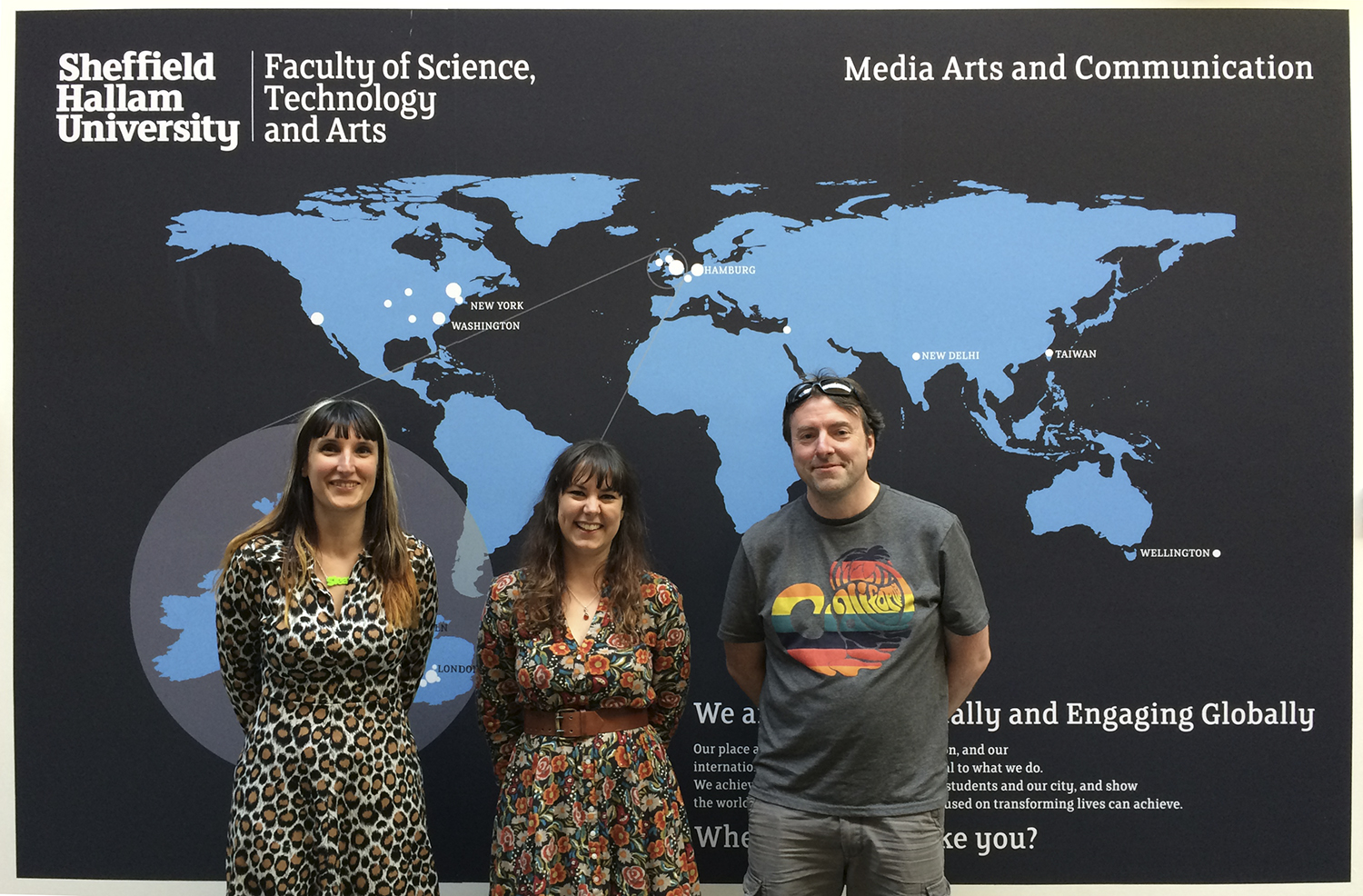
Diane (left) and David (right) with Sophie Parkes-Niel, the newest member of our team and the successful recipient of a C3RI funded PHD studentship in “Folklore, Contemporary Legend and Media” here at Sheffield Hallam University.
Sophie will begin work on her PHD “Writing the ‘Imagined Village’: a practice-led enquiry into folklore and fiction” in October.
“This practice-led creative writing PhD project seeks to place a folkloric practice, a calendar custom, at the centre of a novel to discover its effectiveness as a narrative device and interrogate the themes it brings into play.”
South Yorkshire Folk Tales – Simon Heywood
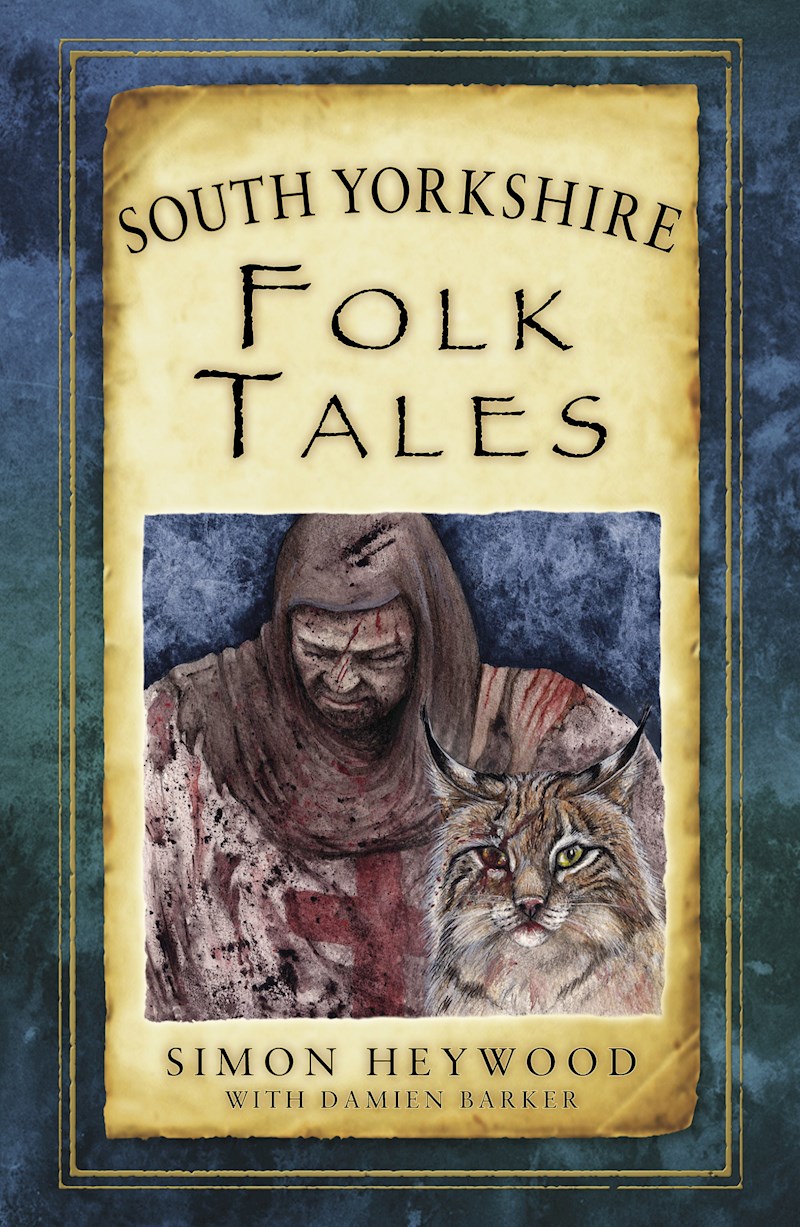
Our friend Simon Heywood has a book of South Yorkshire Folk Tales published by History Press.
“With origins lost in the mists of time, these lively folk tales reflect the wisdom (and eccentricities) of South Yorkshire’s county and people. Amongst the heroes and villains, giants and fairies, knights and highwaymen, are well-known figures, such as Robin Hood and the Dragon of Wantley, as well as lesser-known tales of mysterious goings-on at Firbeck Hall and Roche Abbey. These enchanting tales, many never before recorded in print, will bewitch readers and storytellers, young and old alike.”
See HERE
New Email Address
We now have our own email address – you can contact us at: centre.contemporary.legend@gmail.com
Folklore on Screen – Limited Tickets Remaining!

The ‘Folklore on Screen’ conference will bring together scholars for two days of discussion about folklore in its many forms: its history, present and complex future in relation to cinema, television, photography, digital and online media studies. The conference aims to explores the meaning, import and relevance of folklore in the media and its representation, communication and perpetuation. The multidisciplinary nature of the conference is aimed at a broad spectrum of scholars with either a particular specialism in folklore or an interest in folklore studies as pertaining to their own subject. Featured confirmed speakers include folklorist and film scholar Mikel J. Koven (author of Film, Folklore and Urban Legends), television scholar Helen Wheatley (author of Gothic Television) and journalist Bob Fischer (writer of ‘The Haunted Generation’ in Fortean Times). Talks will present topics including: UFOs, hauntology, urban, digital and online contemporary legends and ‘creepypastas’, folklore in film, art and photograph, folk horror landscapes, folklore in British television and many more.
This conference has now passed.
Faux Horror Archive – 1

Recognising the popularity of field recordings (mainly transport and spoken word) respected sound recordist Eric Handfull founded Transpirit and released a series of ‘spirit recordings’ until arrested at an unregistered Exorcism.
One of a number of rare items from the Archive of Faux Horror collected by Andrew Robinson that will adorn our programme for the upcoming ‘Folklore on Screen’ conference, 13th – 14th September 2019 at Sheffield Hallam University – watch out for more!
Folklore on Screen

A 2-day international conference, with a hauntological music event.
Friday 13th– Saturday 14th September 2019,
Sheffield Hallam University, South Yorkshire, England, UK.
FOLKLORE ON SCREEN – FINAL PROGRAMME
FRIDAY MORNING (registration – 10:30 – 11:00)
11:00-11:30 INTRODUCTIONS
11:30-12:30 – OPENING KEYNOTE – MIKEL KOVEN
Return of the Living Slave: Jordan Peele’s Get Out as Zombie Film
12:30 – 13:30 – LUNCH
FRIDAY AFTERNOON
13:30-15:00 – FEATURED PANEL (A) – Monster Mash
- Matthew Cheeseman (University of Derby) – Dracula’s Fangs
- Craig Ian Mann (Sheffield Hallam University) – Pack Mentality: A Cultural Approach to the Werewolf Film in the 1970s
- Rebecca Bannon (Queens University Belfast) – Ghosts of the Past: Sweeney Todd: The Demon Barber of Fleet Street and liminality
15:00-15:30 – REFRESHMENTS
15:30-17:00 – PANEL (1a) – Ghosts in the Machine
- Stella Gaynor (University of Salford) – Momo and the Simulation of the Real: A Digital Urban Legend
- Joe Ondrak (Sheffield Hallam University) – How to Kill a Ghost: The Hauntological Internet, Creepypasta and Online Misinformation
15:30-17:00 – PANEL (1b): I Want to Believe
- Jake Edwards (University of Warwick) Alien Qualities: Unidentified Flying Objects and the Photographic Image
- David Clarke (Sheffield Hallam University) Tears for Fears: Haunted Artwork on Screen
- Lynn Brunet (Australia) A Sheffield Dreaming: The Art of Peter Booth.
FRIDAY EVENING
19:30 – THE HUBS (Sheffield Hallam University Student’s Union)
CCL & Heretics’ Folk Club present a hauntological music event featuring presentations from Sharron Kraus and Cath Tyler
SATURDAY MORNING (Registration from 9:30)
10:00-11:30 – FEATURED PANEL B: The Haunted Generation
- David Southwell (Hookland) – Receiving the Ghost Transmissions: Factual Broadcasting as Cathode Terror
- Andy Paciorek (Wyrd Harvest Press) – Urban Wyrd
- Bob Fischer (Fortean Times) – The Haunted Generation
11:30-13:00 – PANEL (2a) : The Devil Rides Out
- Tom Clark (University of Sheffield) – The Devil Made Me Do it: The Development of Satanic Narratives in Contemporary Culture
- Timothy Jones (University of Stirling) – Imaginary Revivals: Folk Horror and Twentieth Century Occulture
- Kerry Dodd (Lancaster University) – You Are Not in Control: Glitch Horror and User Agency in the Information Age
11:30-13:00 – PANEL (2b) – The Village of the Damned
- Diane Rodgers – (Sheffield Hallam University) – Beasts, Monoliths & Witchcraft – the Unsung Nigel Kneale
- Andrew Robinson (Sheffield Hallam University) – The Lord of Misrule: misbehaving badly in a Cornish town
- Gail-Nina Anderson (Newcastle) – The Wicker Man and the misuses of Folklore
13:00-14:00 – LUNCH
SATURDAY AFTERNOON
14:00-15:30 – PANEL (3a) – Island of lost souls
- Evelyn Koch (University of Bayreuth, Germany) – Cyclic Time in Folk Horror
- Amy Harris (De Montfort University, Leicester) – Following the Wicca Man: Addressing the Invisible Women behind Contemporary British Folk Horror Cinema
- Ceri Houlbrook (University of Hertfordshire) – Our Love Will Last Forever: The Love-Lock Motif on Screen
14:00-15:30 – Panel (3b) – At the Mountains of Madness: (Hollywood and Beyond)
- Sandy Hobbs (University of the West of Scotland) – Val Lewton at RKO: Horror or Folklore?
- James Williamson (Goldsmiths, University of London) – Challenging Sight and Sense: Tracking the UFO in Science Fiction Cinema
- Ekaterina Netchitailova (Sheffield Hallam University) – Holy-foolishness in Russian Culture, from Holy Fool to the Modern God-driven Eccentric
15:30-16:00 – REFRESHMENTS
16:00-17:00 – CLOSING KEYNOTE – HELEN WHEATLEY (University of Warwick)
Haunted Landscapes: Trauma and Grief in the Contemporary Television Ghost story
Hauntological music event featuring Sharron Kraus and Phil Tyler, 13th September 2019.

Visit the Heretic’s Folk Club Eventbright page HERE for tickets and their Facebook page HERE for further details.
New poster!

Poster designed by Diane A. Rodgers.
You can download a pdf of the draft programme HERE
Folklore on Screen – Call for Papers

Call for Papers – “Centre for Contemporary Legend: Folklore on Screen” – 13-14 September 2019
Sheffield Hallam University, Cantor Building, 153 Arundel Street, Sheffield S1 2NT.
Following the success of the inaugural symposium launching the Centre for Contemporary Legend research group in 2018, we are hosting a larger, themed, conference at Sheffield Hallam University “Folklore on Screen”, 13-14 September, 2019.
This conference will bring together scholars for two days of discussion about folklore in its many forms: its history, present and complex future in relation to cinema, television, photography, digital and online media studies. The conference aims to explores the meaning, import and relevance of folklore in the media, its representation, communication and perpetuation. The multidisciplinary nature of the conference is aimed at a broad spectrum of scholars with either a particular specialism in folklore or an interest in folklore studies as pertaining to their own subject. We seek papers that address the broad span of folklore on screen, from early film and photography, folk horror film, television and music video and forward into urban and online contemporary legends and ‘creepypastas’. Papers on related themes such folklore as relating to landscape or as connected with or the current difficult, shifting political climate and associated onscreen representations are also welcomed.
Proposals should be 200-300 words max for 20-minute papers, we also welcome suggestions for themed or grouped panels. Possible topics to be explored, but not limited to, include:
- Folklore in Film
- Folklore on television
- Folklore and photography
- Folk horror and the ‘wyrd’
- Urban Wyrd
- Urban legends
- Hauntology, hauntological media
- Earth mysteries on screen
- UFOs, aliens and ancient astronauts
- The occult in media
- Ghosts and hauntings
- Folkloric monsters and cryptozoology
- Legend and belief
- Cults and Moral panics
- Fairies on screen
- Memes, digital and online legends
- Creepypastas
- Folklore and social media
- Folkloric landscapes onscreen
Proposals are due by 1st May 2019.
NB – Proposals are now CLOSED
We will provide speakers and delegates with information about location, refreshments and accommodation nearer the time.
For questions, please contact the team at centre.contemporary.legend@gmail.com
 Centre For Contemporary Legend