Tag Archives: sheffield hallam university

New NFS Website Launched

We are pleased to announce the launch of a dedicated website for the National Folklore Survey – http://www.nationalfolkloresurvey.co.uk – click HERE to visit.

The National Folklore Survey for England home page

We will continue to signpost the activities of the NFS here on the CCL site however the NFS site will be the main vehicle for sharing information and events related to the survey.

NFS in WATEROSE Magazine

The National Folklore Survey including a short interview with Dr David Clarke and photographs by CCL member Andrew Robinson, is featured in the 6th February edition of the Waitrose Weekend magazine (Issue 732, page 4) – Pick one up at your local store or view online HERE !

Page 4, Watirose Weekend Magazine, Issue 732

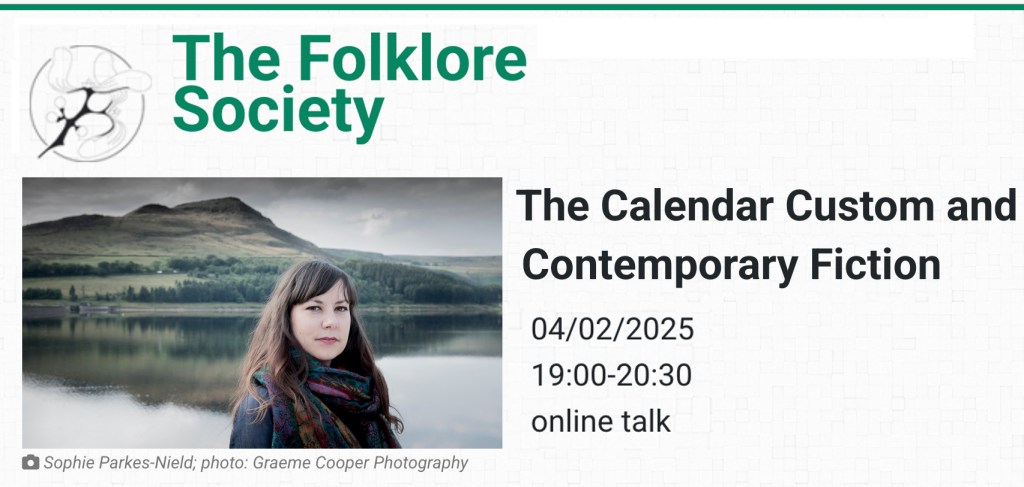
Online Talk for the Folklore Society by Sophie Parkes-Nield

The Calendar Custom and Contemporary Fiction

How could, or even should, a writer approach intangible cultural heritage such as the calendar custom in their creative work?

This talk was based on Sophie Parkes-Nield’s doctoral research that examines the role and impact of the calendar custom in contemporary fiction. Sophie appraised a wide range of examples of contemporary fiction in which a calendar custom is represented, and reflected on her own practice of writing a novel in which a calendar custom is situated at its heart.

Info HERE (NB This event has passed)

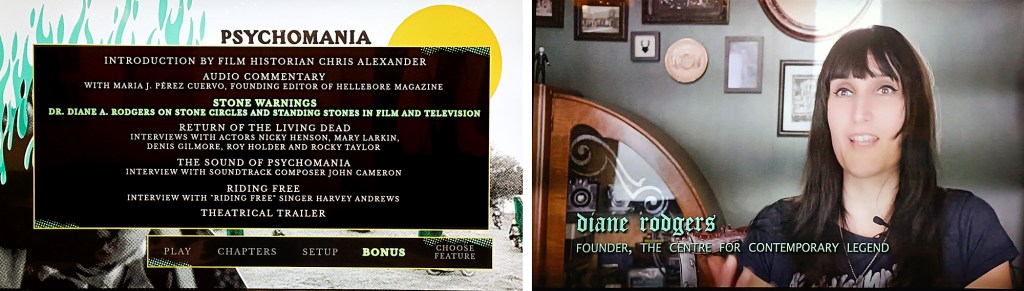
Stone Warnings – Dr. Diane A. Rodgers On Stone Circles And Standing Stones In Film And Television

Photo © Diane Rodgers 2025

CCL member Dr Diane Rodgers is included as part of the special features on the new ALL THE HAUNTS BE OURS from Severin films: “Super proud to be talking about stone circles on screen on the PSYCHOMANIA disc of this luxurious DVD box set – more amazing #folkhorror work from Kier-La Janisse !”

Screen grabs from Psycomainia disc.

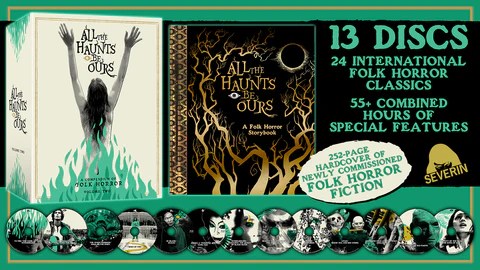
Unquiet spirits have gathered once again: ALL THE HAUNTS BE OURS: A COMPENDIUM OF FOLK HORROR (VOLUME TWO) brings together 24 films representing 18 countries for more of the best-loved, rarely seen, thought-lost and brand-new classics of folk horror, most making their disc debuts.

The set also features 55+ combined hours of new and archival Special Features including trailers, interviews, audio commentaries, short films, video essays, historical analyses and bonus feature-length films; a 252-page hardcover of newly commissioned folk horror fiction by luminaries, and much more, all curated and produced by WOODLANDS DARK AND DAYS BEWITCHED creator Kier-La Janisse.

Special Features For PSYCHOMANIAStone Warnings – Dr. Diane A. Rodgers On Stone Circles And Standing Stones In Film And Television

Full details at SEVERIN HERE

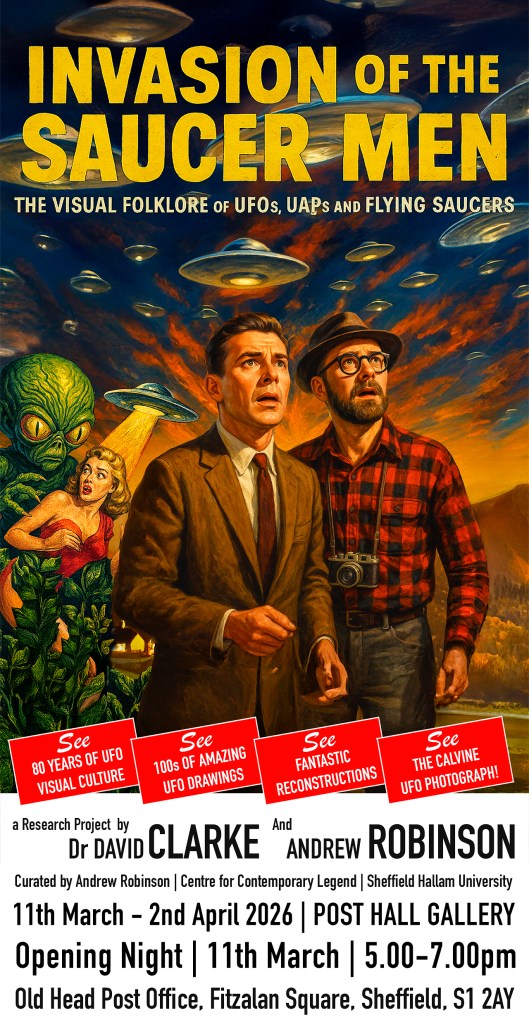
Promotional flyer

Welcoming our new Postdoctoral Researcher

We are delighted to welcome Dr Sophie Parkes-Nield as our new Postdoctoral Researcher on the National Folklore Survey project. 

Dr Sophie Parkes-Nield along with some of her folklore related publications.

Sophie recently gained her doctorate from Sheffield Hallam University in creative writing and folklore exploring how contemporary novels and novelists represent the calendar custom in England. We caught up with her to learn more about her research and interests.

Hello Sophie! We’re looking forward to working with you. What was it about the National Folklore Survey project that inspired you to apply?

I finished my PhD in September and was teaching a course for short fiction publisher, Comma Press, on ‘writing fiction with folklore’. The National Folklore Survey project sounded perfect as it allows me to combine my fascination for English folklore and specifically calendar customs, with the skills I had honed in marketing and communications during the fifteen years prior to my return to full-time academia in 2019. It’s the perfect time to conduct a survey such as this, it’s much needed, and I feel so lucky to be able to work on it.

Why do you think a survey is ‘much needed’?

Folklore seems to be everywhere at the moment: on the television, in films and novel; folklore-based podcasts are exploding. Most excitingly, to my mind, artists and practitioners are looking at how or what aspects of folklore are being used, and whose folklore is being included and excluded. Yet we don’t have a sound idea of how folklore resonates with people living in England today, we don’t know what ‘folklore’ means to them. What excites me about this project is the potential for a dataset that can be used as a benchmark, or a marker for beliefs and behaviours, that we can share with anyone – with everyone!

When did you become interested in folklore?

I first ‘discovered’ English folk and traditional music when I was a teenager, and as my love for the music grew, I began to take more of an interest in folklore and the wider folk arts. I grew up in North Oxfordshire where there is a strong, proud Cotswold morris dancing tradition which I slowly learnt to love – much to the bemusement of my friends and family – but I have only very recently become a morris dancer myself, albeit in the North West tradition, where I now live. Folklore is such a vast subject which is – obviously and necessarily – continually evolving and mutating, and I am constantly reminded how little I know. I’m hoping immersing myself in the National Folklore Survey will remedy that!

Finally, what aspect of the project are you most looking forward to?

It sounds strange, but I’m really looking forward to testing the survey with focus groups. I love that moment in a focus group – or any kind of discussion group – when your perception shifts and you see something in a wholly different way, that gives your project or idea a whole new thread or angle. It always leads to more work, of course, but it’ll be for the better.

Thanks, Sophie!

If you would like to know more about Sophie, her research and her writing, you can visit her website HERE.

The National Folklore Survey for England

CCL are pleased to announce the launch of the National Folklore Survey for England #NFS

Photographs of English Calendar customs across the seasons (from top left – The Haxey Hood, Castleton Garland, Barwick in Elmet Maypole Rising, The Burning of the Bartle, The Antrobus Mummers, Allendale New Year’s Eve Tar Barrel Parade) © Andrew Robinson 2024.

This AHRC funded research project is being led by Dr David Clarke with Dr Diane Rodgers from Centre for Contemporary Legend at SHU along with Dr Ceri Houlbrook and Professor Owen Davies, who founded the MA Folklore Studies at the University of Hertfordshire. as co-leads The project’s international co-lead is Professor Christopher Bader, chair of the Department of Sociology, Chapman University, California, who has directed two large belief surveys in the USA.

The project aims to capture an accurate snapshot of the folklore of multicultural England and gain a new understanding of the impact of colonial and empire narratives on previous surveys. The timing is important as 2024 marks the 60th anniversary of the original Survey of Language and Folklore at the University of Sheffield and the ratification by the UK Government of the UNESCO convention for Safeguarding of the Intangible Cultural Heritage (ICH).

For full details please Visit our new ‘National Folklore Survey’ section by clicking the NFS tab in the menu bar above.

#NFS lead contact email: david.clarke@shu.ac.uk

ISCLR – 40th Anniversary – Perspectives on Contemporary Legend – Panels and Presentations

We are excited to share our final schedule for the coming week’s ISCLR Conference. In addition to 13 themed panels and 33 presentations the conference includes a ghost walk around Sheffield City and Cathedral; a performance by the Grenoside Sword Dancers; a showing of folklore related films by SHU Illustration students; a conference banquet: and a day trip to the Peak District including a visit to Peak Cavern (The Devils Arse) in Castleton and a guided tour of Eyam.

Please find below a pdf showing a breakdown of the panel topics – a pdf of abstracts will be shared soon.

40th International Perspectives on Contemporary Legend Conference

Register Now!

We’re pleased to open registration for the 40th International Perspectives on Contemporary Legend Conference, held this year June 26-30, 2023 at Sheffield Hallam University, South Yorkshire, UK, and hosted by the Centre for Contemporary Legend. 

There will be a series of themed panels including:

  • Body Horror
  • Social Media
  • Furries and Ghosts
  • Politics, fake news, rumour
  • Conspiracy & Belief
  • Nation & Indigienous legend
  • Haunted Houses
  • Digital Legends
  • Monsters
  • X-Files and UFOs
  • Crime & Moral Panics

The conference includes an optional ‘Legend and Landscape‘ excursion to the Peak District National Park, with a guided visit to the Plague VIllage of Eyam (see HERE) and a tour of Peak Cavern in Castleton (see HERE).

There will also be a conference meal at the Showroom Cinema and an evening event (watch out for further details!)

We look forward to seeing you in SHEFFIELD!

Registration

To register please use the online form HERE

Or use the PDF below:

Additional Info

A few notes about this year’s conference:

  • This year, ISCLR is pleased to extend members-only registration rates for members of The Folklore Society (FLS). 
  • We have a hotel booking tool with special conference rates for two hotels in Sheffield: the Leonardo Hotel Sheffield and the Novotel Sheffield Centre. Book HERE

If you would like to join ISCLR please use this online form HERE 

Or use the PDF below:

— 

For further information on ISCLR please contact:

Virginia Siegel (she/her/hers)

Secretary, International Society for Contemporary Legend Research

Professor of Practice, University of Arkansas Libraries

Email: isclr.secretary@gmail.com or vdsiegel@uark.edu

CALL FOR PAPERS – PERSPECTIVES ON CONTEMPORARY LEGEND CONFERENCE

CALL FOR PAPERS – PERSPECTIVES ON CONTEMPORARY LEGEND 

40th conferenceInternational Society for Contemporary Legend Research

Hosted by the Centre for Contemporary Legend at Sheffield Hallam University

Sheffield, South Yorkshire, UK | 26-30 June, 2023 

The International Society for Contemporary Legend Research is pleased to announce that the 2023 Perspectives on Contemporary Legend 40th International Conference will be held in the Dorothy Fleming Lecture Theatre, Charles Street building at Sheffield Hallam University, 26-30 June 2023

Poster designed by Doc Rowe for the first ‘Perspectives on Contemporary Legend’ conference, July 1982

The 40th conference will celebrate the return of legend scholars to the city where academic inquiry into this new genre of folklore began in the summer of 1982. Not only will we aim to celebrate that special anniversary but also to examine how contemporary legend scholarship has evolved and expanded its remit to incorporate new stories, rumors, conspiracy theories, fake and folk news in the age of pandemics and perma-crises.

SHU’s city campus is located conveniently alongside Sheffield’s Midland Railway station that has direct rail links with London St Pancras International (2 hours 10 minutes) and Manchester International Airport (approx 1 hour 30 minutes). The organisers are making arrangements for a special group rate with the Novotel on Arundel Gate, a few minutes walk from the venue and within easy reach of city centre pubs and restaurants.

The conference will be organised as a series of seminars at which most attendees will present papers. Concurrent sessions will be avoided so that all attendants can hear all papers. Presentations will be 20 minutes with an additional ten minutes for discussion. Proposals for papers on all aspects of contemporary, urban, or modern legend research are sought, as are those on any legends, traditions and stories that circulate actively at present or have circulated at an earlier historical period. Proposals for special panels, seminars and any other related areas to contemporary legend and folklore are encouraged. A few possible themes we could highlight for 2023 include:

  • Is the Truth still out there? Marking the 30th anniversary of The X-Files TV show
  • Under or mis-represented cultural communities/identities in legend studies
  • New legends from post-industrial urban areas 
  • Folk Horror: Cultural and global diversity

The organisers are Centre for Contemporary Legend co-founders David Clarke, Diane Rodgers and Andrew Robinson. To submit a proposal, please forward a title and abstract (250-300 words) by February 15, 2023 by e-mail to David Clarke (david.clarke@shu.ac.uk) and Diane Rodgers (d.rodgers@shu.ac.uk). 

As part of conference events, we will also be hosting film and multimedia screenings, we encourage submissions of short films or multimedia (5 -30 minutes in length) exploring, related to or influenced by Folklore, Legend or Custom as part of a curated evening of screenings – please send expressions of interest and/or links by February 15, 2023 to Andrew Robinson – (andrew.robinson@shu.ac.uk) (NB – further info will be provided shortly)

Sheffield, with a history brimming with stories and legends, is the UK’s greenest city with more trees per person than any city in Europe. Like Rome, the city is said to be built upon seven hills. One third of its area falls within the Peak District National Park, with its hills and moors forming a ‘golden frame’ around the valley of the river Don. Sheffield is world famous for its cutlery and steel industries symbolised by the statue of Vulcan, the Roman god of fire and forge, that stands on the city’s Victorian Town Hall.

Relief of Vulcan, the Roman god of fire and forge, Sheffield Town Hall – image David Clarke.

Sheffield was founded in Anglo-Saxon times as a settlement on the river Sheaf that marked the boundary between the kingdoms of Mercia and Northumbria, the ‘Sheaf-field’ or town beside the boundary river. Following the Norman Conquest, William de Lovetot built a castle at the confluence of the rivers Don and Sheaf to represent Norman power over the North of England. Sheffield Castle became one of the largest strongholds in the medieval England and in Elizabethan times it became the jail of Mary Queen of Scots. During the summer of 2023 archaeologists will begin excavating the ruins of that castle including its huge gatehouse as part of a £15 million project to regenerate the historic centre of Sheffield.

Comprehensive information on the conference will be forthcoming and will also soon be available on both HERE and on our Facebook Page. We look forward to welcoming you to this conference, the area, and the trading of our stories in our annual reunion of researchers who work on this ever current and growing legends! 

For more information on the International Society for Contemporary Legend Research and to learn how to join, visit: https://contemporarylegend.org/

Covid Customs Callout – Tell Us Your Stories!

Background image – Covid Pom-Pom display on church gate, Baildon, West Yorkshire.

Here at the Centre for Contemporary Legend at Sheffield Hallam University we have been collecting examples of responses to Covid-19 in the form of new customs, interventions and displays from scarecrows, rainbows, stone snakes and curbside gifts to communal responses such as the Belper Moo. We are also interested in how traditional calendar customs have adapted to the lockdown and the limitations imposed by the pandemic, often taking their activities online.

You can find some of the responses we’ve documented further down this blog and CCL members David Clarke and Andrew Robinson discuss their interest (along with the Belper Moo if you’ve not heard of it before!) in the Podcast they produced for the Festival of The Mind also detailed below.

We would very much like anyone who has an interesting story about ‘Covid Customs and Interventions’ they are willing to share to contribute it to our collection, along with any imagery they are happy to provide. All contributions will be fully credited (if desired) and the results shared with all contributors.

Please email us at centre.contemporary.legend@gmail.com with your story, images or for further details.