On Photographing a Most Unruly Horse

by Andrew Robinson

I first photographed the Antrobus Soul Cakers some 22 years ago in the November of 1997. On this occassion I was disappointed with my results and was only really happy with one image from the evening, shown below.

The Wild Horse and Driver, Antrobus Soul Cakers, 1997 © Andrew Robinson.

The Soul Cakers enact their variation of a traditional mumming play at a number of pubs and other locations in the vicinity of Antrobus and Cumberbach, Cheshire over six nights during late October and early November as they have done for well over 170 years. Characters include: the Letter-in, Black Prince, King George, Martha, the Quack Doctor, Little Dickie Dairy Doubt, Beelezebub, the Wild Horse and his Driver who all travel from venue to venue in a mini bus.

The play is usually performed at four pubs per night between 8:30 and 11:30pm with each performance becoming increasingly raucous as the evening wears on and more drinks are consumed. The venues are crowded, with poor patchy lighting, where the performers constantly pace up and down, moving from bar to bar whilst reciting their lines. This makes photographing the event, especially with a manual focus, film camera, a challenge. Other photographers have solved this challenge by asking the performers to pose as a group before or after their performance. Of the photographs from the play itself, most, like mine, show the horse and driver.

The Wild Horse and Driver, The Antrobus Arms, 10/11/19.

On revisiting the event this year I had more success, thanks in part to the advantages of digital technology, and I’d like to think greater experience, however again my most successful images, like the majority of photographs of the play, were of the horse and driver. I realise now however that this is largely because, whilst the other characters quickly move on and off stage, constantly pacing up and down and around the pub, the horse and driver remain before the audience for an extended period, over 10 of the roughly 25 mins of performance, and during this time remain relatively still while extended speeches are made. This provides far greater opportunity to capture successful images than the earlier more fluid scenes of the play, aside that is, from the sudden crazed lunges of the wild horse, his escape from the bar and at times the pub and the attempts of the driver to chase him down and bring him to heel with whip in hand.
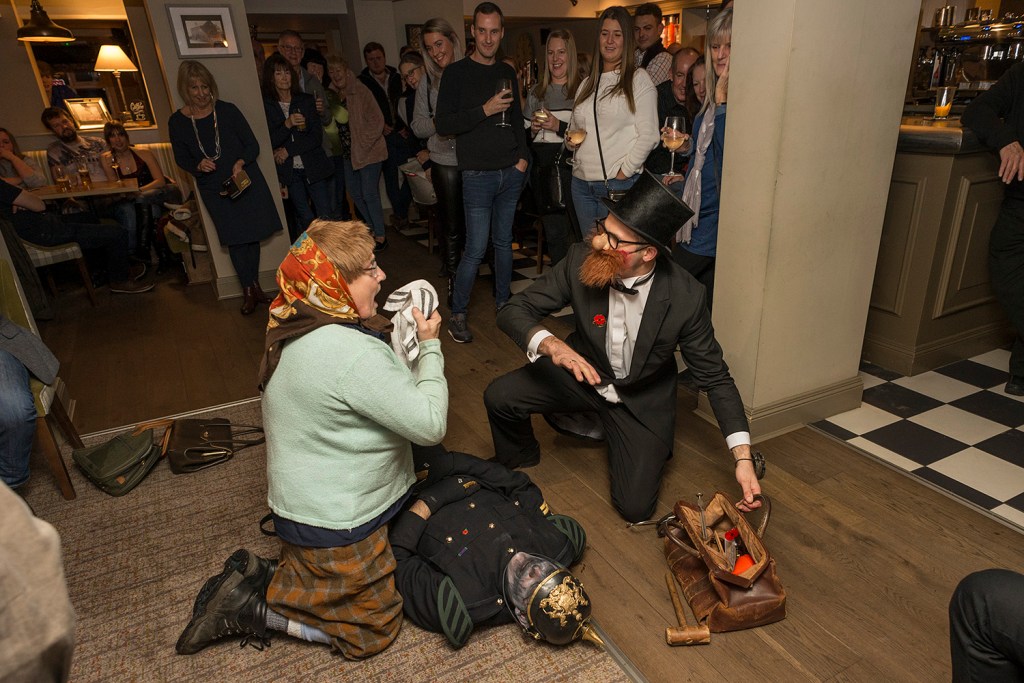
The Quack Doctor and Martha mourn the passing of the Black Prince, The Antrobus Arms, 10/11/19.

Another challenge for photographers, sound recordists and other observers in attendance is their non-invisibility and the performer’s lack of respect for the fourth wall. Such readily identifiable outsiders often attract the attention of the performers who intentionally pause and pose for their photograph, shout into their microphones or tease or taunt them. This I experienced myself on my most recent visit when performers would stop, pat me on the head, crouch down and pose in an exaggerated manner for my camera until I’d taken their photograph, much to the amusement of the audience.
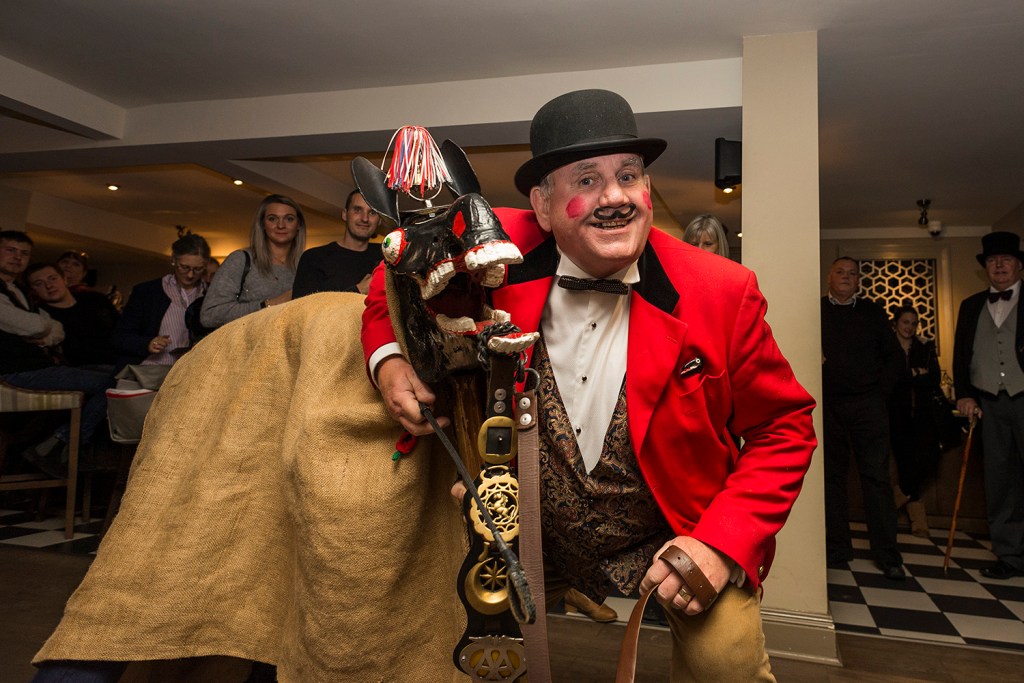
The Wild Horse and Driver, The Antrobus Arms, 10/11/19.

Also present at these performances was a PhD student, who had been interviewing the Soul Cakers as part of research into disguise and performance. During the final performance of the evening at the Antrobus Arms the horse character pulled the reluctant folklorist from the audience and danced her around the room much to the entertainment of rest of the onlookers.

Photographs © Andrew Robinson 2019

Call for Papers – Deadline: 23rd April 2020

CANCELLED due to Covid-19

This one-day symposium, hosted by Sheffield Hallam University’s Centre for Contemporary Legend, seeks to explore the influence and impact of England’s calendar customs on contemporary communities, and what their continued performance means for us today. We actively encourage dialogue between disciplines and areas of study, and welcome speakers from the academy as well as practitioners, collectors, participants and governors of English calendar customs.

England has a rich and varied calendar of folkloric customs, communal traditions that take place in the same place, at the same time each year, which are usually governed, stewarded and performed by the community itself. Though the origin or purpose of the custom itself may have been lost, or the function now deemed archaic, communities continue to perform them, often attracting crowds of spectators and tourists, not to mention significant media coverage, both in traditional press and online, through social media channels.

Ronald Hutton (1996) observes that collective, society-wide holidays, such as Whitsun and Wakes Week, have declined in favour of the ‘celebration of private relationships and the individual lifecycle’. So why do these customs persist? Why are old customs surviving or being revived and new customs being invented? Are we experiencing a resurgence of interest in English calendar customs and, if so, what is driving this? What role does digital technology (the internet, social media and audio visual technology) play in contemporary calendar customs? Is social media, with its opportunities to publicise customs to a broader audience beyond the boundary stone, contributing to a raised profile and increased interest? And with easy access to smart phones and digital media, are we documenting customs and disseminating the resulting media more easily and more frequently? What is the impact of this documentation, and what happens to this documentation once the custom is complete for the year?

England’s calendar customs can be dramatic and dangerous, such as the tar barrels of Ottery St Mary, or as delicate and diligent as Derbyshire’s well dressings. What do contemporary communities achieve by performing their annual custom, and what is the function of the custom for individual participants and spectators from within and without the community? Does the custom bring together communities that would otherwise be fragmented for a unified moment of celebration, or is the custom another indication of exclusivity and elitism orchestrated by particular groups? Is it an opportunity to assert and express distinct local identity?

We invite contributions that address one of the following, or related, themes:

  • Identity, nationalism and patriotism
  • Englishness and tradition
  • The English custom of the future
  • Revival and invention
  • Commercialisation and the money problem
  • Imagery and photography, film and moving image
  • Social media and online representation
  • Documentation and the future archive
  • Politics, and the problems with governance and stewardship
  • Performance and practice
  • Placemaking, custom tourism
  • Customs and community cohesion
  • Representations of customs in the arts, culture and media

Proposals should be 200-300 words for 20-minute papers, and please also include a personal biography of no more than 200 words. We also welcome suggestions for themed or grouped panels.

Download a pdf HERE

Proposals and any enquiries should be sent to:

Date and Location:

  • Thursday 9 July 2020
  • 9:30am – 5.00pm with evening exhibition opening
  • Sheffield Hallam University, Cantor Building, 153 Arundel Street, Sheffield S1 2NT.

Image of Castleton Garland Ceremony, May 29th 2019, © Andrew Robinson 2020.

Happy Halloween by Diane A. Rodgers

Folk horror is a sub-genre that has come to be associated with onscreen use of haunting landscapes and sinister isolated communities. However, it is often the use of folklore itself, with writers and directors drawing on myth and contemporary legend that helps to create an eerie atmosphere in the films and television programmes we love to spook ourselves with. In no particular order, here is a selection of some films using folklore that are personal favourites and ones to watch out for this Halloween. 

1. The Blood on Satan’s Claw (1971), directed by Piers Haggard. 

An obvious choice to those familiar with folk horror, but for those new to the genre, an absolute must-see. Frequently cited as one of the ‘unholy trinity’ of folk horror films (along with Witchfinder General, 1968 and The Wicker Man, 1973), Blood on Satan’s Claw is my favourite of the trio. A cult favourite of the League of Gentlemen gang also (some of whom recorded an audio version this year), set in early 18th-centry England, the film tells the tale of demonic possession taking over a village. From the start when a deformed skull with bits of fur and an uncanny eye still intact are unearthed, strange events start to occur, including the village children forming a Satanic cult overseen by a cruel teenage girl named Angel. Superb Satanic ritual, murder and mayhem ensue! 

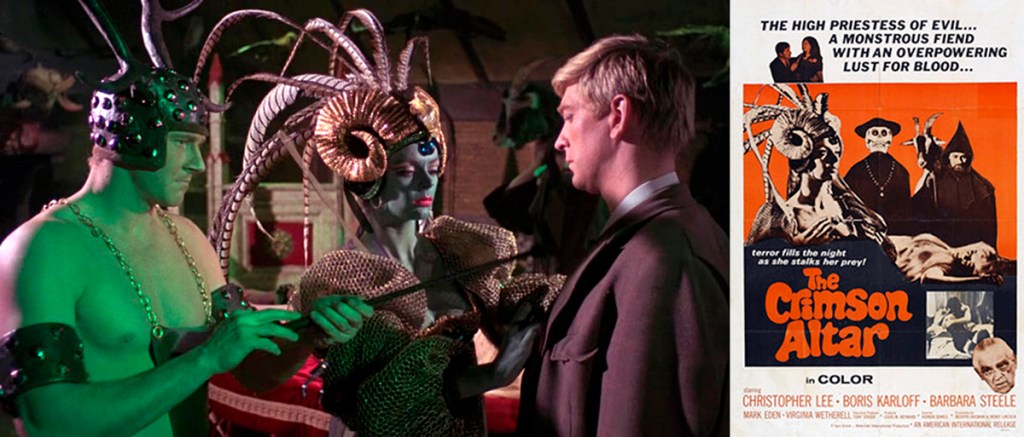
2. Curse of the Crimson Altar (1968), directed by Vernon Sewell. 

Starring horror stalwarts Boris Karloff, Christopher Lee and Barbara Steele, this lesser-known cult movie features black magic against the backdrop of swinging 1960s hedonism. An evil sorcerer invites a young couple to his spooky mansion, with the lure of a hip party masking the black magician’s plans to sacrifice the young man to atone for the evil misdeeds of his ancestors.  Loosely based on a story by H. P. Lovecraft, the film features bizarre and erotic Black Mass ceremonies, spooky ritual masks, groovy 1960s outfits and possibly the best folk horror headdress worn by an evil black magic priestess ever! 

3. Dr Terrors House of Horrors (1965), directed by Freddie Francis 

One of my all-time favourite films, this portmanteau classic has everything: Peter Cushing, Christopher Lee, Michael Gough, Donald Sutherland, 60s DJ Alan Freeman and even national treasures Roy Castle and Kenny Lynch. Folkloric stories of werewolves, killer plants, vengeful disembodied hands, vampires and fateful tarot cards abound. My own favourite, however, is where we get to witness Roy Castle performing swinging 60s beatnik jazz numbers on his trumpet, embroiled in a tale of stolen Voodoo music! What more could you possibly need? 

4. Borderlands (2013), directed by Elliot Goldner 

This is one of the final two films in my list that the less you know about in advance, the better. Presented as found footage, it stars the wonderful Gordon Kennedy as a craggy religious brother sent by the Vatican to investigate supernatural goings-on in a remote West Country church. Pagan sacrifice and violent exorcism become entangled in the unfolding tale where events steadily escalate. The atmosphere is palpably thick and creepy throughout, haunting and with a huge twist in the tale – avoid spoilers before watching! 

5. Antrum: The Deadliest Film Ever Made (2019), directed by David Amito and Michael Laicini  

Recently screened at Sheffield’s Celluloid Screams horror film festival, Antrum is a film presented in the spirit of mischievous movie genius William Castle, complete with warnings that, by watching this film, the audience accepts responsibility for any event occurring to them during or after the screening including “illness, injury, mortal danger or death”. The mini-documentary preceding the film explains that screenings of Antrum have their very own folklore and legend, being surrounded by bizarre incidents including the last cinema that showed the film subsequently burning to the ground. The cursed feature, in which a young girl and her brother attempt to dig a hole to hell, shot in 1979, reputedly vanished without a trace, and Else films have located the only known copy in existence. This is that film. I absolutely HAD to see this film. And I haven’t died… yet.  

Happy Halloween! 

Faux Horror Archive – 3


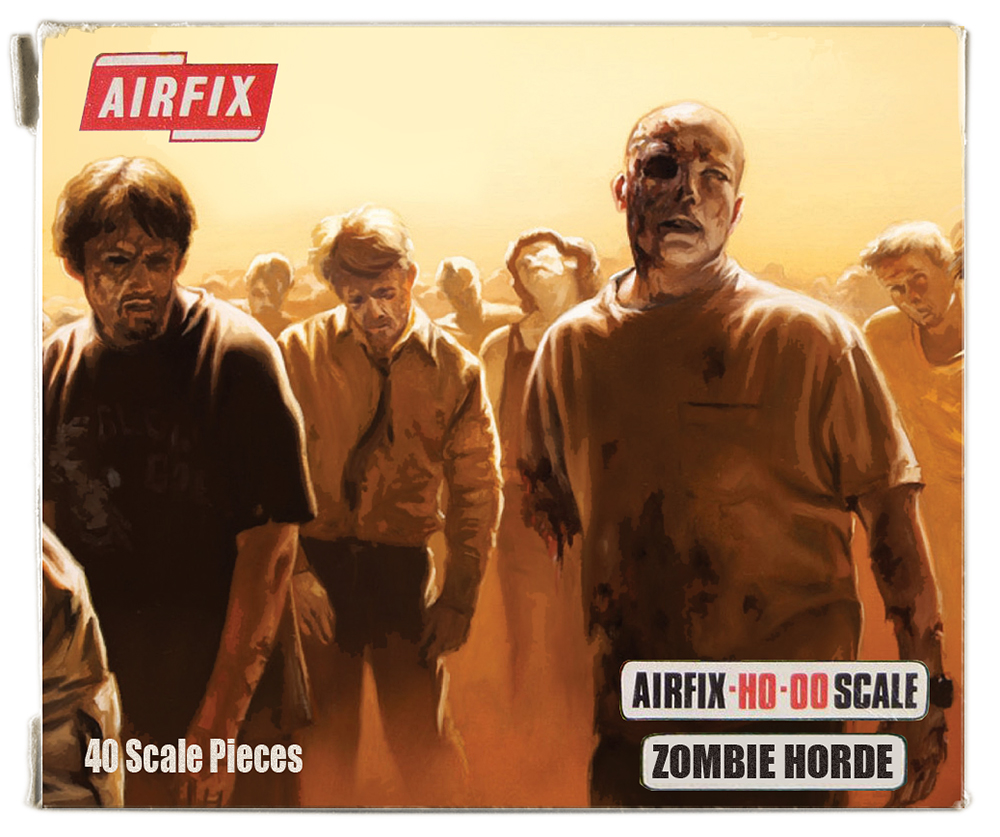
A rare example of the AIRFIX ‘Ghost and Ghouls’ series of HO-OO figures, three sets were released in 1972 with a further three planned for 1973 however they were withdrawn without explanation to be replaced by Robin Hood.

From the Archive of Faux Horror

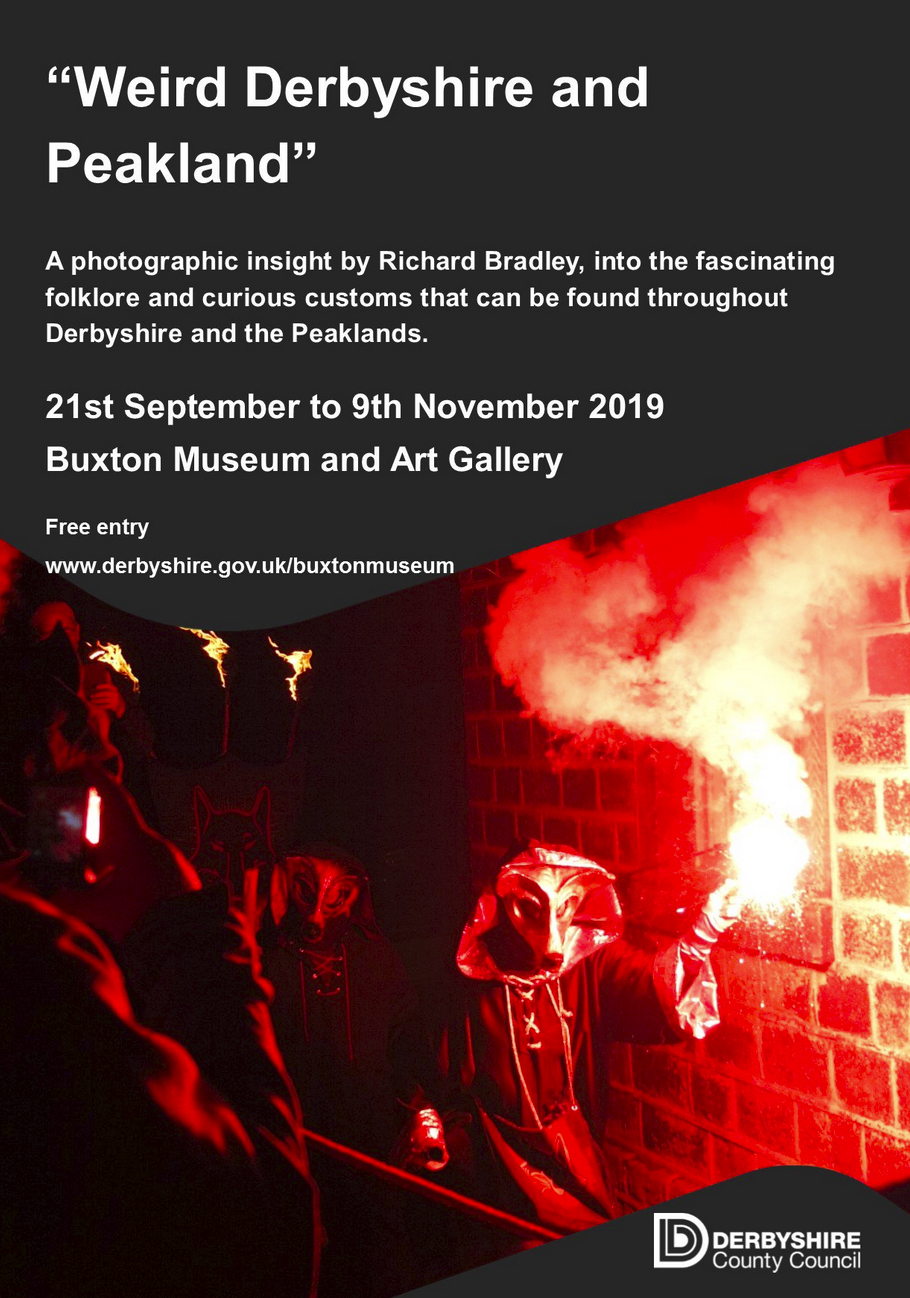
Weird Derbyshire and Peakland – Richard Bradley

An exhibition of photographs and ephemera at Buxton Museum and Art Gallery by our colleague Richard Bradley exploring “the fascinating folklore and curious customs that can be found throughout Derbyshire and Peaklands.”

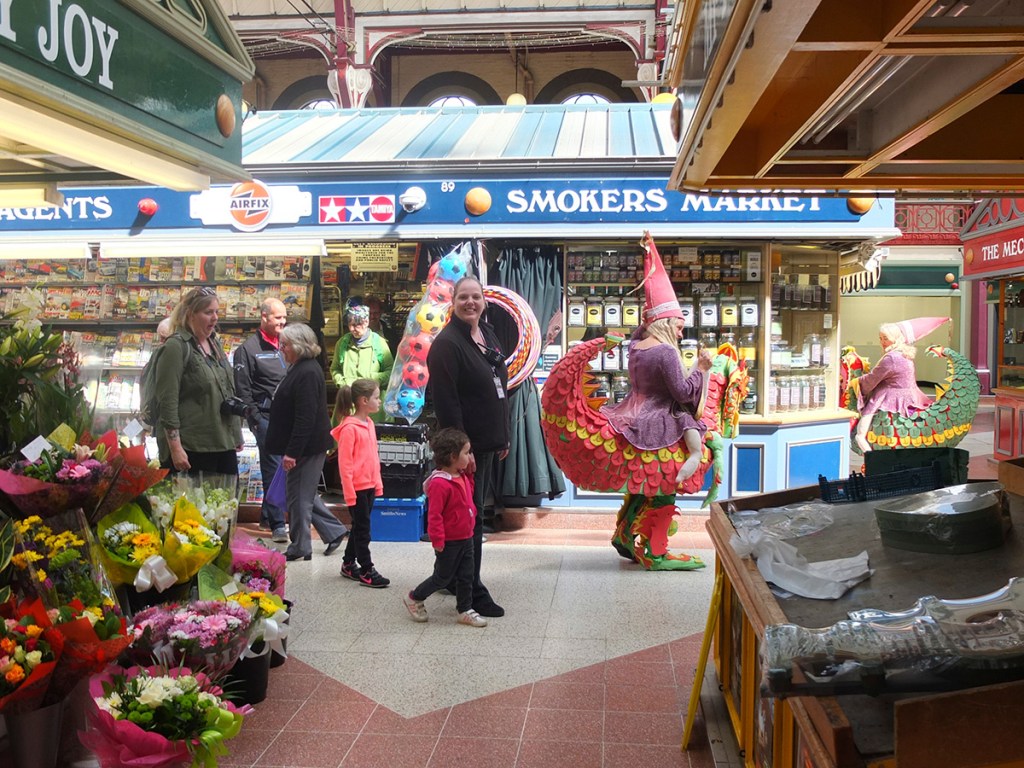
St George’s Day Parade, Deby (23rd April) – © Richard Bradley 2019.

“Derbyshire – and the Peak District, which spills over into the neighbouring counties of Cheshire, Greater Manchester and South and West Yorkshire – has one of the highest concentrations of calendar customs in the UK.”

“These encompass everything from rituals of very ancient (possibly Pagan) origin like the well dressings and the Castleton Garland Ceremony; to more modern alternative annual sporting contests dreamed up over a pint or three down the local pub…”

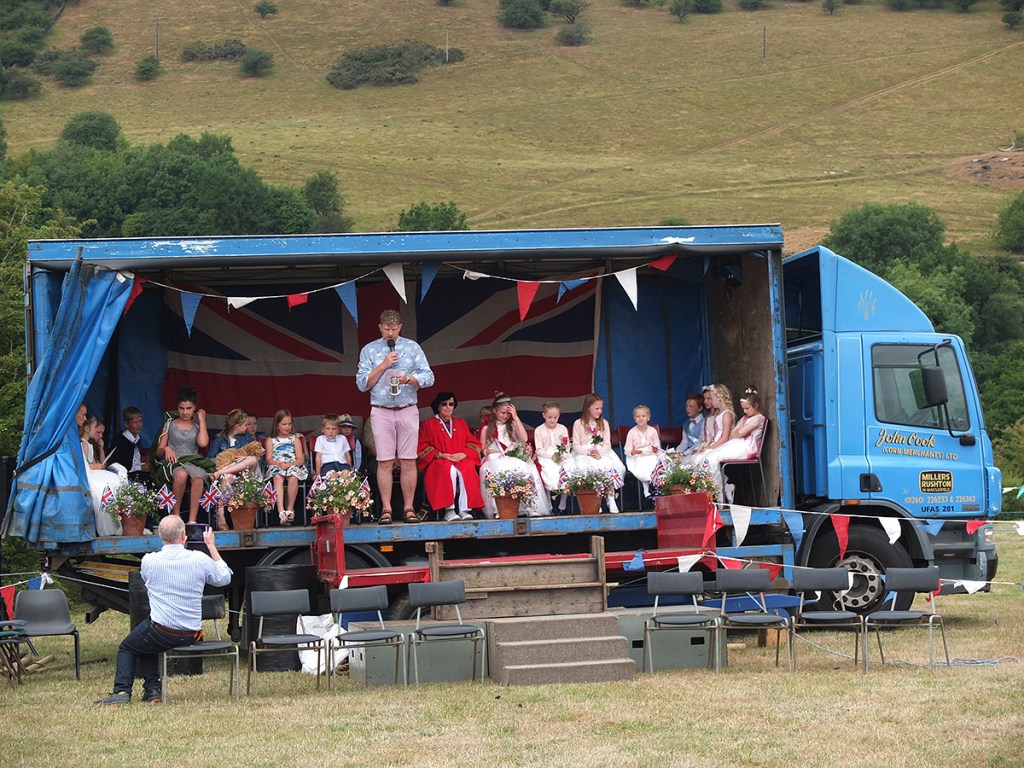
Invesiture of the Mayor of Rainow (July) – © Richard Bradley 2019.

“Since 2015 Richard Bradley (born Sheffield 1980; raised South Darley and Two Dales near Matlock) has been traveling the area documenting these strange rituals. Living in a post-agrarian age, we have become woefully out of touch with the turning of the seasons. Whilst many of our fellow creatures hunker down and hibernate during the long, cold and dark winter months, we humans keep the electric lights blazing and carry on, some suffering from SAD (Seasonal Affective Disorder) ion the process. Could embracing the large array of annual customs, festivals and ceremonies reconnect us to the landscape and the natural rhythms of the passing year?” (exhibition text)

The exhibition continues until November 9th 2019.

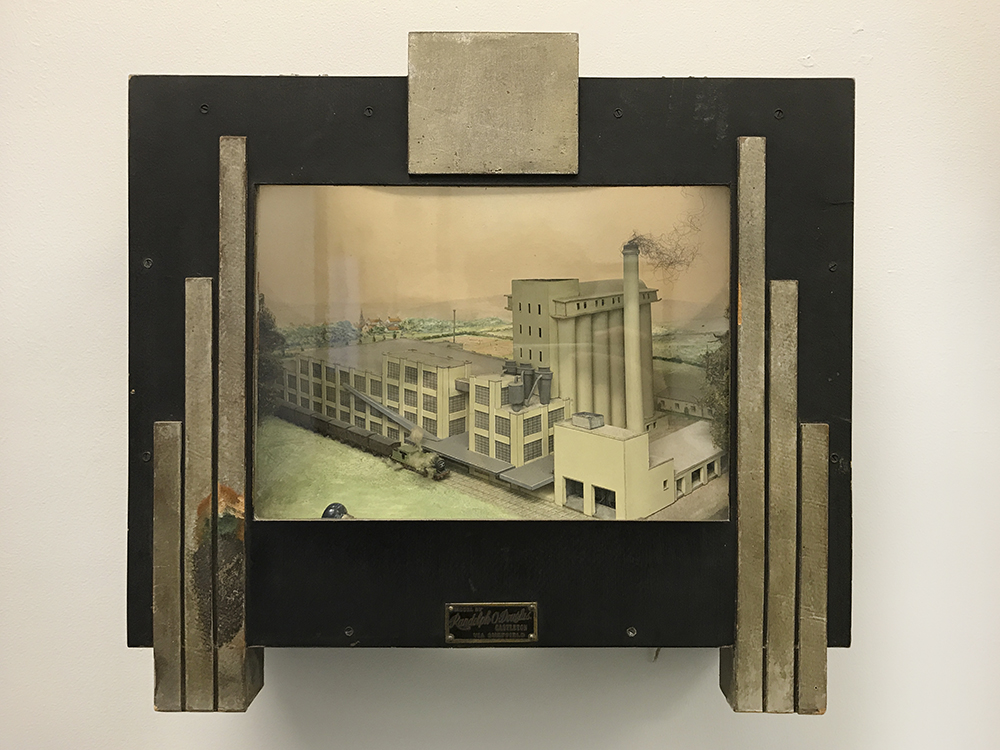
If visiting the recently refurbished Museum the new ground floor display celebrating the ‘House of Wonders’ created by Randolph Osborne Douglas in nearby Castleton is worth a visit. Randolf and his wife Hetty ran the ‘Douglas Museum’ in their cottage, which was open to the public from 1926 until 1978, charging a sixpence for entry.

The display includes examples of Douglas’s silversmithing, miniature models and complete display cases from the Museum along with items from his time as ‘The Great Randini’ an escapologist, magician and friend of Harry (‘handcuff’) Houdini including drawings and descriptions of tricks he devised. In fact it was Randolph who showed Harry an upside down straitjacket escape, which became one of Houdini’s iconic tricks.

Andrew Robinson, October 2019.

Faux Horror Archive – 2

Whilst beloved by most children, I-SPY’s ‘Horror’ series proved problematic for many parents and saw only one short print run. Other titles included ‘Haunted Houses’, ‘Murderer’s Graves’ and ‘Instruments of Death’.

Another rare item from the Archive of Faux Horror collected by Andrew Robinson

CCL on Tour – The Burning of the Bartle, 2019.

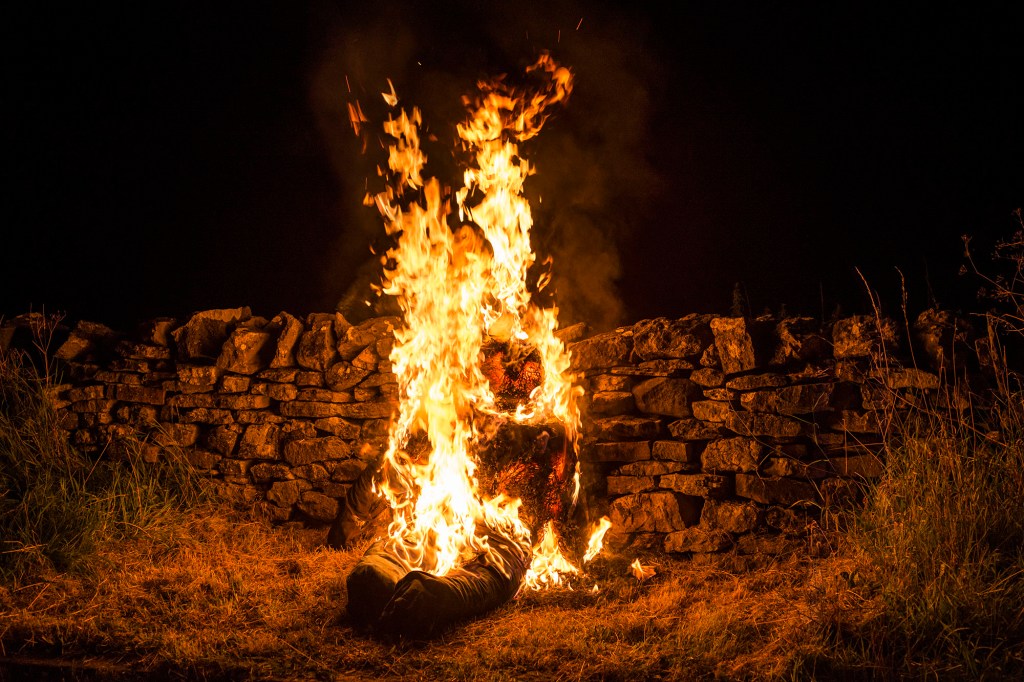
On the Saturday of August Bank Holiday weekend, along with CCL colleagues David Clarke and Richard Bradley, I travelled north to attend the Burning of the Bartle at West Witton, near Leyburn in North Yorkshire. This short, quiet, yet slightly macabre calendar custom takes place each year on the Saturday closest to St Bartholomew’s Day (24th August). The custom is reported to date back over 400 years (although the church records to prove this were lost in a fire) however first hand testimony exists dating back to the mid 19th century.

During the burning for a moment the flames and smoke parted to allow a glimpse of the burning straw of Owd Bartle’s head looking for all the world like a glowing skull peering out at us all. Photograph © Andrew Robinson, 2019.

At around 8.45pm a small number of townspeople, holiday makers, visiting photographers and folklorists, gather in the half light of dusk at the point where Chantry Lane meets Mesnes Lane (A684) at the west end of the village to await the arrival of ‘Owd Bartle’. The Bartle is a straw effigy of a man carried by two villagers accompanied by a caller carrying a staff. The figure is made and kept in secret during the preceding week, dressed in trousers or jeans and a jumper and often wears a hat and a sheep’s wool beard. He has a Halloween mask over his face behind which two glowing bulbs are positioned to shine through the eyes. Some years the trio are accompanied by a visiting piper, masked and in disguise apparently to avoid any issues with PRS.

The custom has been maintained by at least three generations of the Harker family. This year the Bartle was carried by David Harker and Gareth Robson and the caller was John Harker. A Harker has carried for as long as anyone can remember, John’s father Alan began his Bartle making in the early 1950s while his grandfather Jack was a singer before him. David has been involved for over 20 years while John has been caller for 33 years taking over from John Spencer in 1986. Gareth is a ‘new recruit’ having started in the late 1990s.

At around 9.00pm the main road through the village is closed by members of the organising committee, who have been trained to do so in order to avoid the cost of hiring the police and to prevent irate motorists forcing their way through the crowds as happened a few years back. Shortly after a procession begins during which the Bartle is carried between his escorts through the village stopping at local ale houses (The Wensleydale Heifer, The Fox and Hounds and the Old Star) and with a number of villager’s houses. At each stop the execution party is met by the residents before the caller recites a short story in verse listing a series of nearby locations:

On Penhill Crags he tore his rags,
Hunter’s Thorn he blew his horn,
Capplebank Stee happened a misfortune and brak’ his knee,
Grisgill Beck he brak’ his neck,
Wadham’s End he couldn’t fend,
Grisgill End we’ll mak’ his end,
Shout, lads, shout!

The gathered crowd then responds with a hearty ‘Hurrah!’

The verse is said to refer to the chase and capture of a notorious sheep stealer, (or perhaps a pig or cattle thief) by local farmers and his subsequent execution after a trail at the local village court held on St Bartholomew’s Day. Others believe the custom to be an acting out of a dragon myth linked to the area.

After the recitations drinks (usually a shot of whiskey or glass of wine) are provided to the escorts, brief conversations are held and the procession moves on. As the Bartle and his party approach the east end of the village they turn to the right up Grassgill (Grisgill) Lane and after a couple of hundred yards stop and the effigy is propped up next to a dry-stone wall overlooking fields. Health and safety have seen the introduction of barriers to keep the crowd at a safe distance and once all are gathered the Bartle has his mask and glowing eyes removed before being set alight. The crowd watches as the figure slowly burns while the verse is recited a further two or three times and traditional songs are sung.

This year there was a reasonable crowd, perhaps as many as 50 people, a mix of villagers and holidaymakers staying in the village along with those who’d stayed behind after a fell race held earlier in the afternoon and a small number of people who’d attended specifically to meet the Bartle.

This was my second visit, in 1995 there was no musician, no official road closure and no health and safety barrier at the burning site. In the intervening years one of the carriers, Alan Harker, has retired and fewer songs are sung for which less people know the words however little else has changed. Performed by just three people accompanied by a musician and lasting not more than an hour the custom is relatively small and quiet however the reciting of the doggerel and the sight of the burning effigy can tend to linger in the memory.

Andrew Robinson, Sept 2019.

Andrew, David and Richard about to hit the road after witnessing the burning.