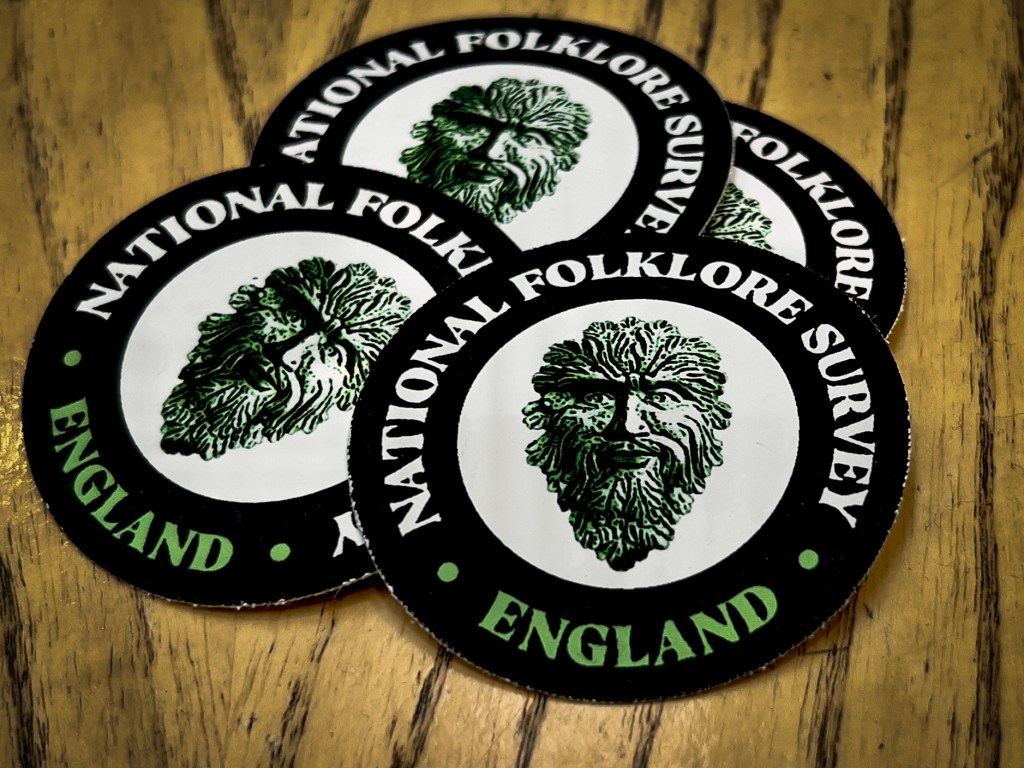
The National Folklore Survey for England home page
We will continue to signpost the activities of the NFS here on the CCL site however the NFS site will be the main vehicle for sharing information and events related to the survey.
The National Folklore Survey including a short interview with Dr David Clarke and photographs by CCL member Andrew Robinson, is featured in the 6th February edition of the Waitrose Weekend magazine (Issue 732, page 4) – Pick one up at your local store or view online HERE !
The SHU NFS Team – Dr David Clarke, Dr Diane Rodgers and Dr Sophie Parks-Nield
On Wednesday 5 February 2025, Sheffield Hallam based members of the project team along with other members of CCL invited university colleagues to help launch the National Folklore Survey for England.
It was standing room only as staff and students from the across the university gathered to hear our presentation and, most importantly, enjoy home-baked brownies and prosecco.
The launch proved a chance for the team to offer more information about the project, detailing its aims, scope, parameters and methodologies, and take questions. We were delighted at the enthusiasm with which our project was received, and we look forward to sharing more about the Survey as we progress.
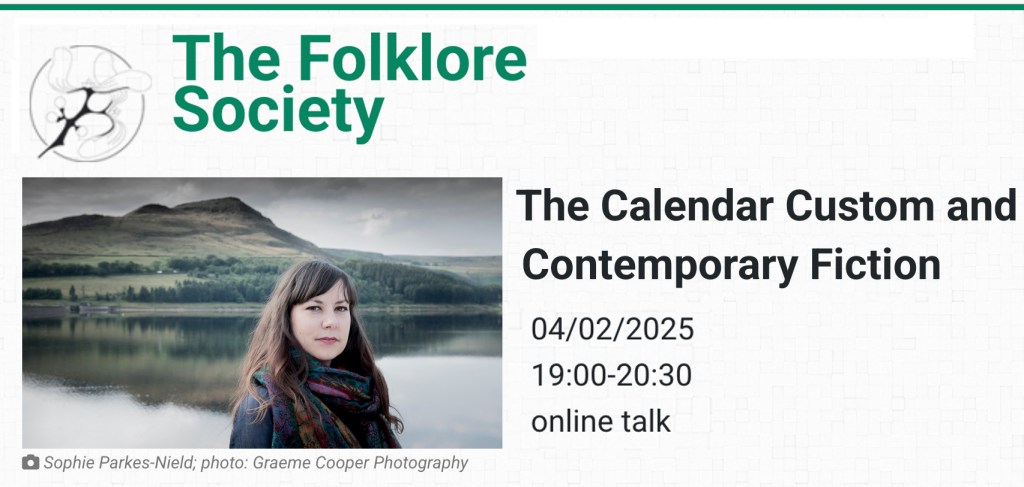
How could, or even should, a writer approach intangible cultural heritage such as the calendar custom in their creative work?
This talk was based on Sophie Parkes-Nield’s doctoral research that examines the role and impact of the calendar custom in contemporary fiction. Sophie appraised a wide range of examples of contemporary fiction in which a calendar custom is represented, and reflected on her own practice of writing a novel in which a calendar custom is situated at its heart.
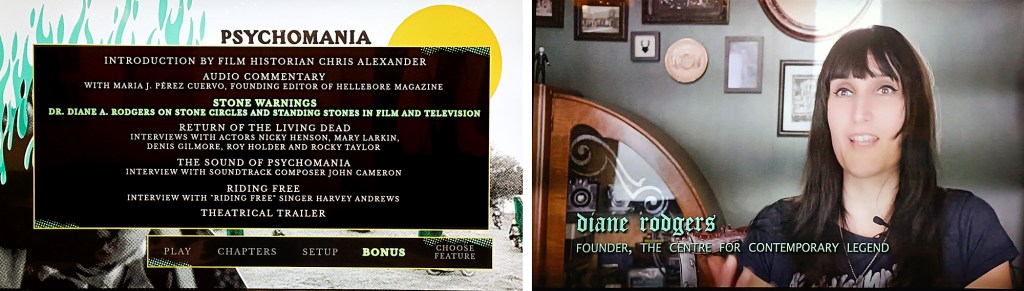
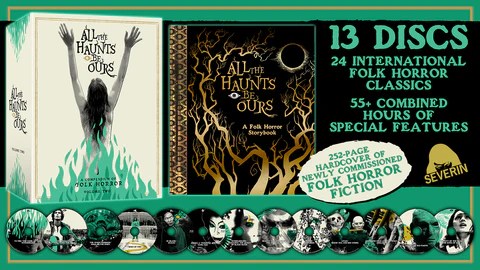
CCL member Dr Diane Rodgers is included as part of the special features on the new ALL THE HAUNTS BE OURS from Severin films: “Super proud to be talking about stone circles on screen on the PSYCHOMANIA disc of this luxurious DVD box set – more amazing #folkhorror work from Kier-La Janisse !”
Screen grabs from Psycomainia disc.
Unquiet spirits have gathered once again: ALL THE HAUNTS BE OURS: A COMPENDIUM OF FOLK HORROR (VOLUME TWO) brings together 24 films representing 18 countries for more of the best-loved, rarely seen, thought-lost and brand-new classics of folk horror, most making their disc debuts.
The set also features 55+ combined hours of new and archival Special Features including trailers, interviews, audio commentaries, short films, video essays, historical analyses and bonus feature-length films; a 252-page hardcover of newly commissioned folk horror fiction by luminaries, and much more, all curated and produced by WOODLANDS DARK AND DAYS BEWITCHED creator Kier-La Janisse.
Special Features For PSYCHOMANIA – Stone Warnings – Dr. Diane A. Rodgers On Stone Circles And Standing Stones In Film And Television
We are delighted to welcome Dr Sophie Parkes-Nield as our new Postdoctoral Researcher on the National Folklore Survey project.
Dr Sophie Parkes-Nield along with some of her folklore related publications.
Sophie recently gained her doctorate from Sheffield Hallam University in creative writing and folklore exploring how contemporary novels and novelists represent the calendar custom in England. We caught up with her to learn more about her research and interests.
Hello Sophie! We’re looking forward to working with you. What was it about the National Folklore Survey project that inspired you to apply?
I finished my PhD in September and was teaching a course for short fiction publisher, Comma Press, on ‘writing fiction with folklore’. The National Folklore Survey project sounded perfect as it allows me to combine my fascination for English folklore and specifically calendar customs, with the skills I had honed in marketing and communications during the fifteen years prior to my return to full-time academia in 2019. It’s the perfect time to conduct a survey such as this, it’s much needed, and I feel so lucky to be able to work on it.
Why do you think a survey is ‘much needed’?
Folklore seems to be everywhere at the moment: on the television, in films and novel; folklore-based podcasts are exploding. Most excitingly, to my mind, artists and practitioners are looking at how or what aspects of folklore are being used, and whose folklore is being included and excluded. Yet we don’t have a sound idea of how folklore resonates with people living in England today, we don’t know what ‘folklore’ means to them. What excites me about this project is the potential for a dataset that can be used as a benchmark, or a marker for beliefs and behaviours, that we can share with anyone – with everyone!
When did you become interested in folklore?
I first ‘discovered’ English folk and traditional music when I was a teenager, and as my love for the music grew, I began to take more of an interest in folklore and the wider folk arts. I grew up in North Oxfordshire where there is a strong, proud Cotswold morris dancing tradition which I slowly learnt to love – much to the bemusement of my friends and family – but I have only very recently become a morris dancer myself, albeit in the North West tradition, where I now live. Folklore is such a vast subject which is – obviously and necessarily – continually evolving and mutating, and I am constantly reminded how little I know. I’m hoping immersing myself in the National Folklore Survey will remedy that!
Finally, what aspect of the project are you most looking forward to?
It sounds strange, but I’m really looking forward to testing the survey with focus groups. I love that moment in a focus group – or any kind of discussion group – when your perception shifts and you see something in a wholly different way, that gives your project or idea a whole new thread or angle. It always leads to more work, of course, but it’ll be for the better.
Thanks, Sophie!
If you would like to know more about Sophie, her research and her writing, you can visit her websiteHERE.
David talks about the CCL National Folklore Survey, his interest in Folklore and his roots in Sheffield along with a number of related topics for the ‘Look Up Sheffield’ Newsletter HERE below is a short extract….
Tell us about the Centre for Contemporary Legend. How did that start?
“It was a group of like-minded people, like-minded academics, coming together and saying, ‘Oh, you know we ought to set up a research group.’ But we’ve got an actual office now, a physical office at Sheffield Hallam Uni, for the project. We’ve got a new postdoctoral research associate starting in January who’s going to be working with me for two years on the survey, Sophie Parkes-Nield.
We’ve got Diane Rodgers, also of Sheffield Hallam, Andrew Robinson, Ceri Houlbrook and Owen Davies who founded the MA Folklore Studies course at Hertfordshire University, together with US sociology professor Christopher Bader.
So we will be surveying a sample of I think about 3, 000 people, and we can definitely say it will shine a light on modern folklore because this will be a gold standard survey, it won’t just be an anecdote here or an anecdote there. It’s great to have 10,000 collecting slips with bits of information about people’s ghost stories and sayings and dialect. But at the moment, those survey slips are just tied up with string sitting in a basement at University of Sheffield. I want something that will give us robust data.”
This AHRC funded research project is being led by Dr David Clarke with Dr Diane Rodgers from Centre for Contemporary Legend at SHU along with Dr Ceri Houlbrookand Professor Owen Davies, who founded the MA Folklore Studiesat the University of Hertfordshire. as co-leads The project’s international co-lead is Professor Christopher Bader, chair of the Department of Sociology, Chapman University, California, who has directed two large belief surveys in the USA.
The project aims to capture an accurate snapshot of the folklore of multicultural England and gain a new understanding of the impact of colonial and empire narratives on previous surveys. The timing is important as 2024 marks the 60th anniversary of the original Survey of Language and Folkloreat the University of Sheffield and the ratification by the UK Governmentof the UNESCO convention for Safeguarding of the Intangible Cultural Heritage (ICH).
For full details please Visit our new ‘National Folklore Survey’ section by clicking the NFS tab in the menu bar above.
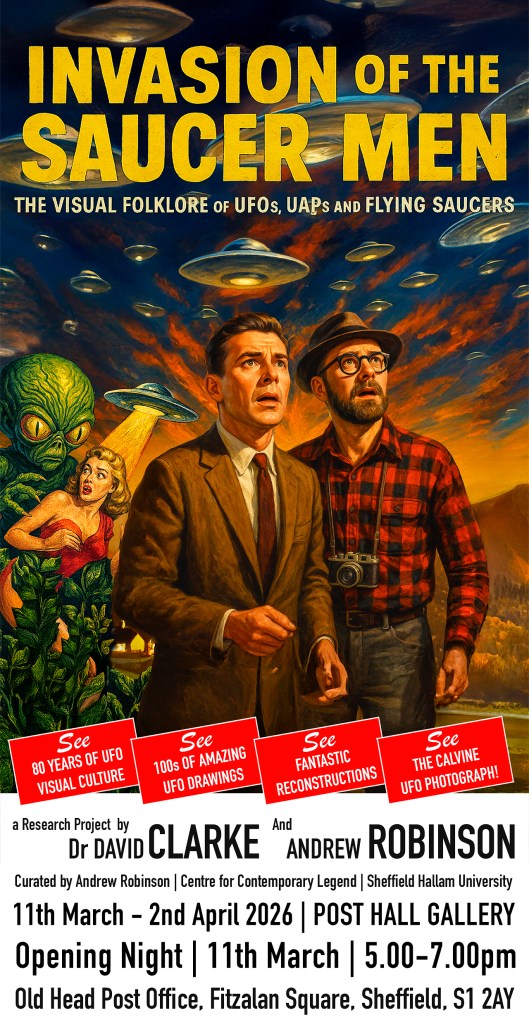
On Saturday 11th May 2024 CCL members Dr David Clarke and Andrew Robinson hosted an event at the Centre for Folklore, Myth and Magic in Todmorden to a sold-out audience of over 50 people where they introduced who their research into visual representations and public perceptions of UFOs and UAPs (Unidentified Anomalous Phenomena).
Dr David Clarke (R) and Andrew Robinson (L) outside the Folklore Centre
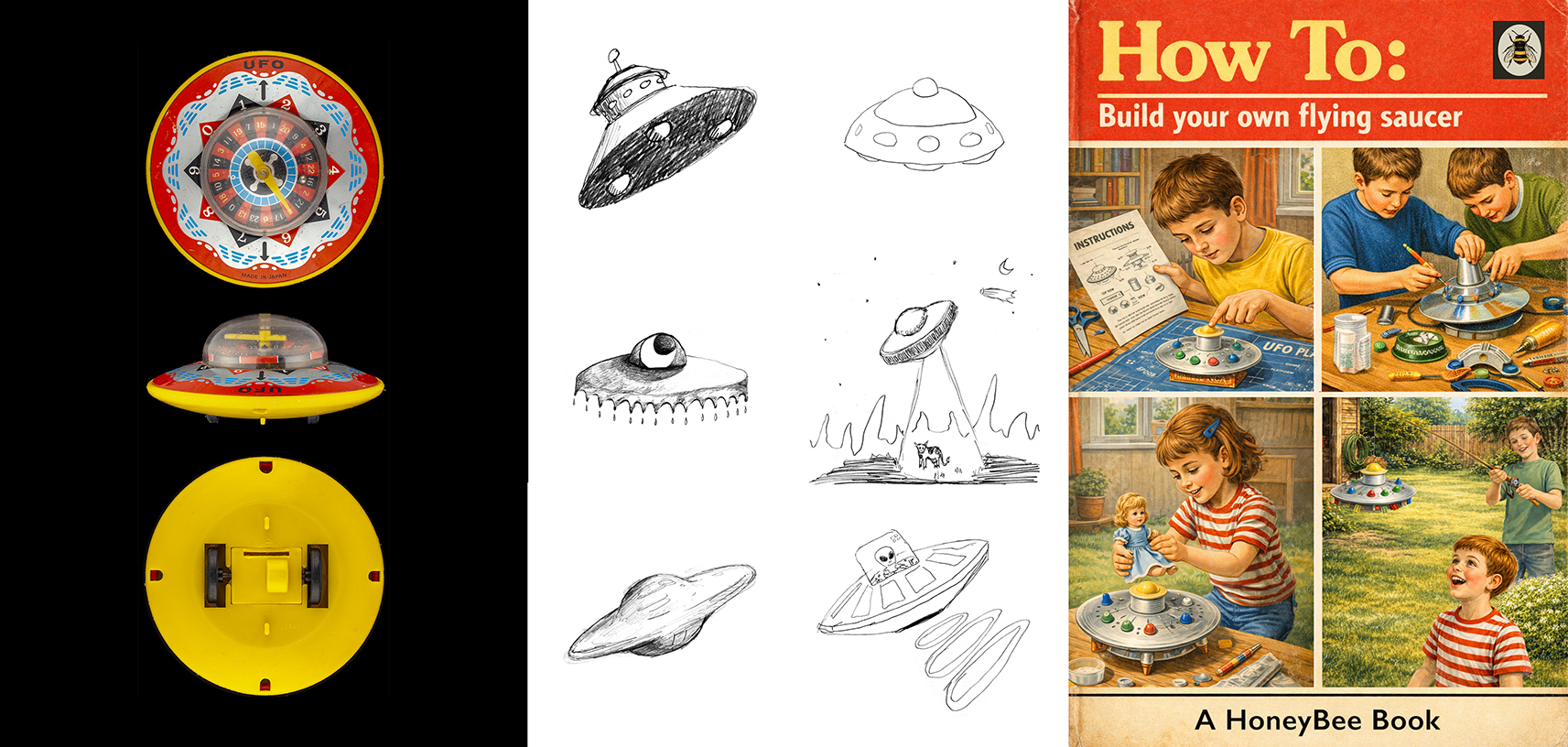
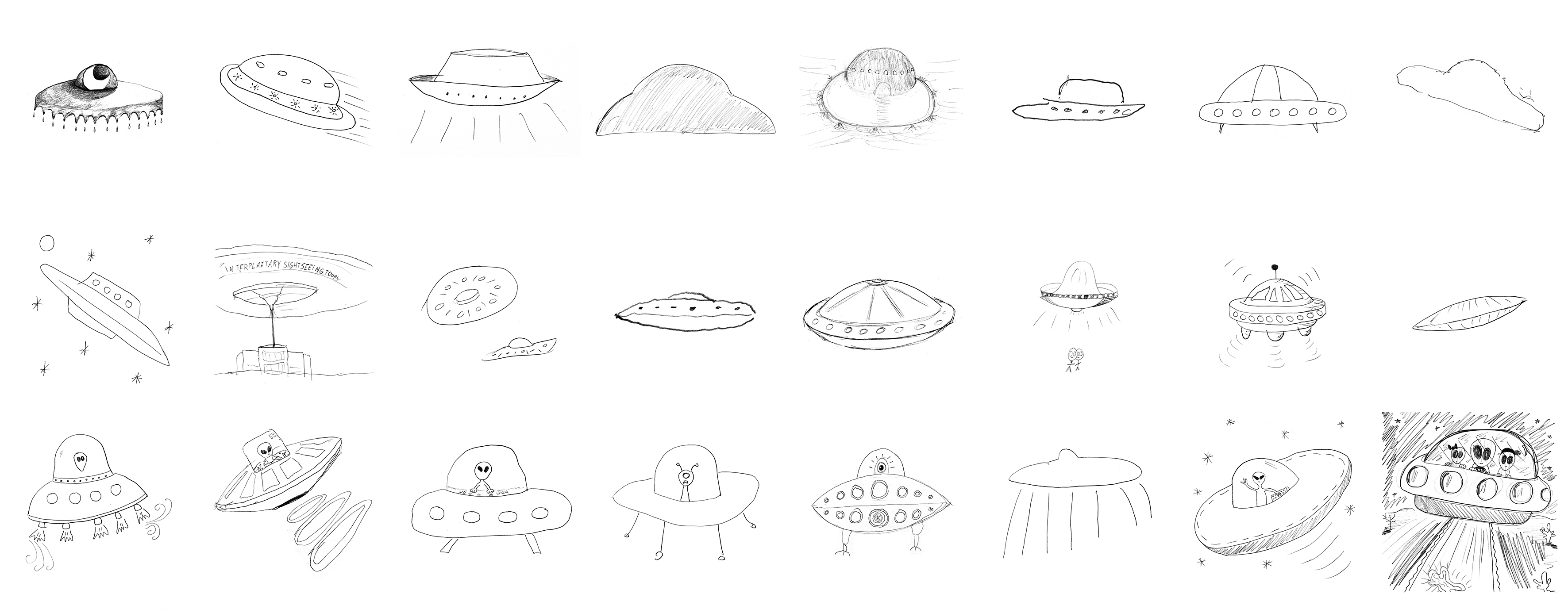
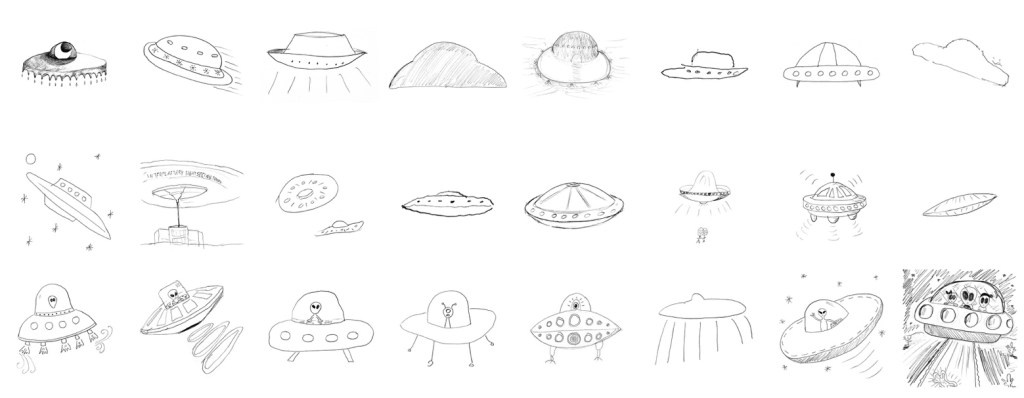
The research, titled ‘In The Eye Of The Beholder’ explores the role of images in the creation of folkloric narratives and visual rumour legends through the sharing of the complex and intertwining narratives that surround reports of UAPs and UFOs. As part of the event attendees took part in a drawing exercise providing the researchers with more than 40 different visualisations of UFOs for use in their creation of a taxonomy of UFOs as part of their study which will ultimately lead to research publications, exhibitions and further public engagement.
Images produced by participants at the event including work by Kate Lyall (centre top), Britta (top right), and Paul Weatherhead (bottom right).
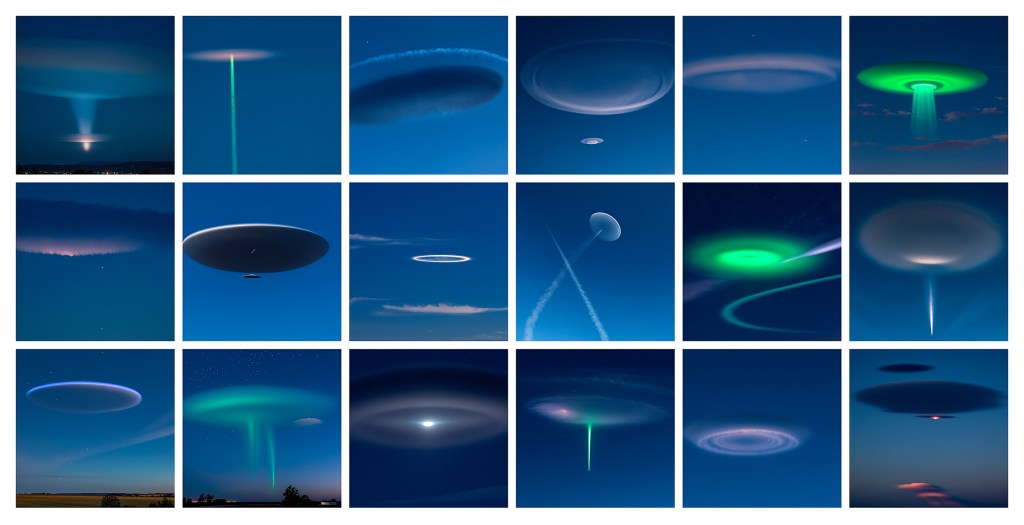
As part of their presentation Senior Lecturer in Photography Andrew Robinson introduced a number of photographs that were used to provide evidence of classic U.K. sightings of UFOs but have since been shown to have been staged. This was accompanied with a demonstration of how this might have been achieved resulting in a mass sighting of UFOs within the venue (pictured above).
To accompany the talk Andrew also curated an exhibition of photographs and artefacts from his and David’s personal archives of UFO imagery and artefacts alongside with facsimile copies of previously top secret Ministry of Defence documents now available from the National Archives.
The research project will continue with a virtual presentation at ‘In The Cloud of Unknowing: Encounters with UFOs’ being hosted at Midred’s Lane Arts Complex in Beach Lake, Pennsylvania in July of this year (more details here) and a further participatory even at the Miskatonic Institute of Horror Studies in London in November.
We are excited to share our final schedule for the coming week’s ISCLR Conference. In addition to 13 themed panels and 33 presentations the conference includes a ghost walk around Sheffield City and Cathedral; a performance by the Grenoside Sword Dancers; a showing of folklore related films by SHU Illustration students; a conference banquet: and a day trip to the Peak District including a visit to Peak Cavern (The Devils Arse) in Castleton and a guided tour of Eyam.
Please find below a pdf showing a breakdown of the panel topics – a pdf of abstracts will be shared soon.